
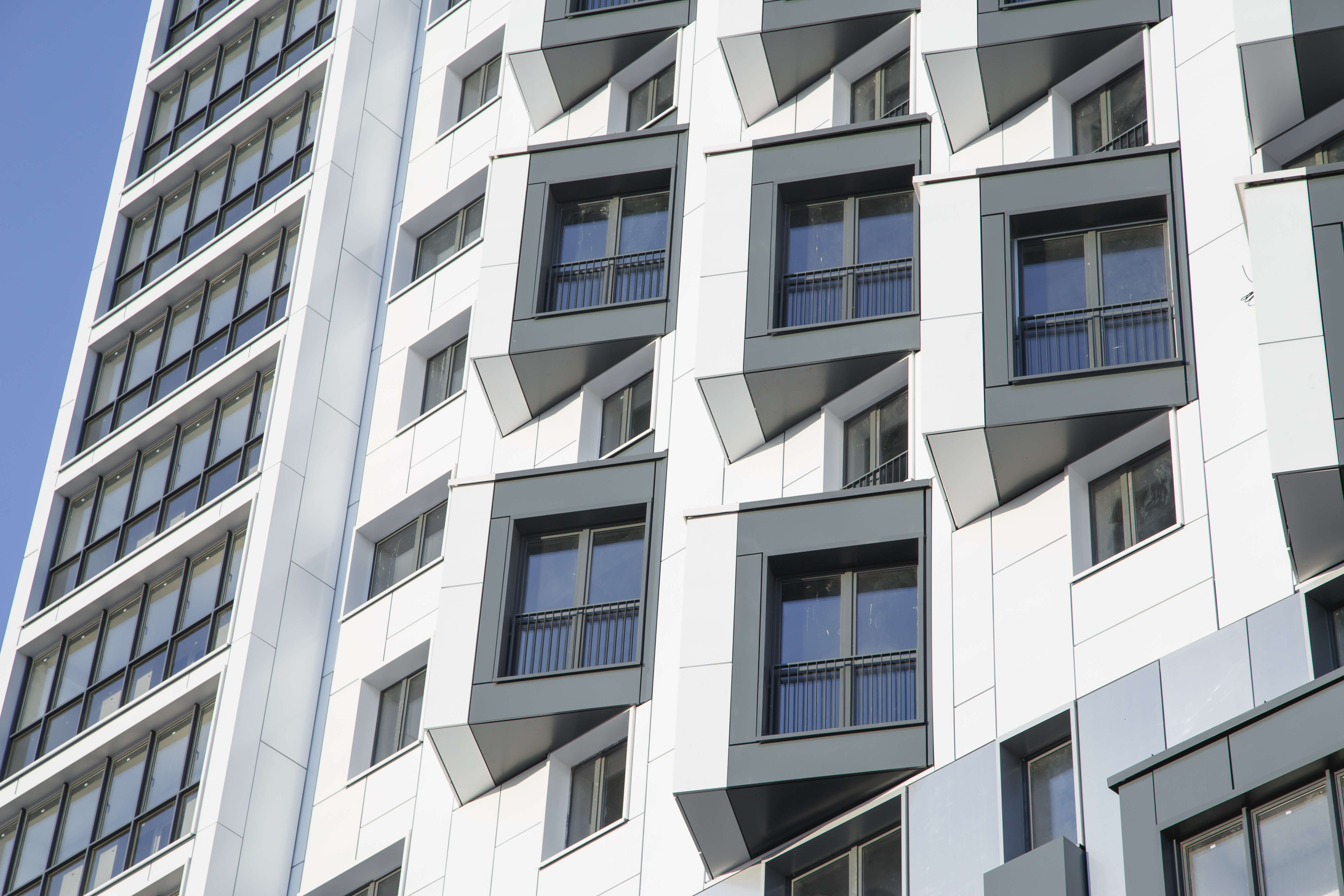
In construction and architectural design, a façade is essentially the external face of a building. However, the way this part of the structure is built plays a key role in its energy efficiency. In recent years, the ventilated façade has become one of the most effective solutions for improving both the efficiency and the modern appearance of buildings.
What Is a Ventilated Façade?
A ventilated façade is a type of external cladding system that creates an air cavity between the building’s outer wall and the façade material. It consists of three main elements:
- The outer layer (external cladding)
- The air cavity
- The insulation layer
The air cavity and insulation play a major role in improving the building’s energy performance. By separating the external layer from the structural wall, they act as a thermal barrier, protecting the building from summer heat and winter cold.
In terms of materials, ventilated façades are often made of ceramic, but they can also be built using materials such as prefabricated concrete, metal, wood, stone, or mineral-based solid surfaces.
Advantages of Ventilated Façades
In addition to their aesthetic benefits, enhancing the appearance of a building and giving it a modern look, ventilated façades offer several important technical advantages.
On the one hand, this double-skin system significantly improves the energy efficiency of the building, acting as thermal insulation and reducing heating and cooling costs.
It also provides an additional waterproofing layer, which is especially beneficial in rainy areas, as it helps prevent moisture infiltration into the building.
Frequently Asked Questions About Ventilated Façades
Is it more expensive than a traditional façade?
The cost of a ventilated façade can be higher at the time of construction. After all, it requires additional materials, and the project itself may be more complex. However, the investment is usually recovered quickly thanks to the energy efficiency benefits it provides.
How is maintenance carried out?
One of the main advantages of this type of cladding system is its low maintenance requirements. Although it depends on the materials used, occasional cleaning is generally enough to maintain both its appearance and functionality.
In summary: a ventilated façade is an innovative design solution that improves the energy efficiency of buildings and can generate significant long-term energy savings.