
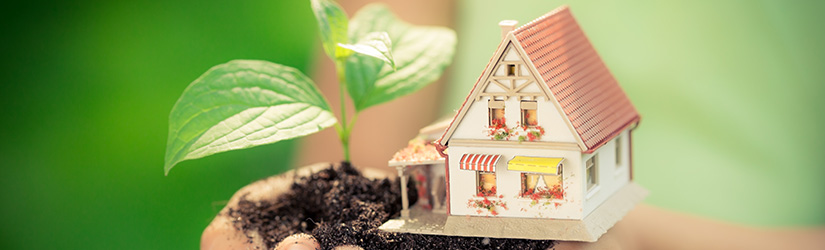
An eco-friendly home is one that is self-sufficient. In other words, its energy consumption depends on natural sources, so its carbon footprint is minimal or virtually non-existent. Likewise, eco-friendly homes also achieve optimum living conditions with minimum energy consumption, taking into account factors such as the orientation of the building, the land and the surrounding natural environment.
There are suitable materials for the construction of eco-friendly homes that help to:
Improve air quality and avoid releasing toxic substances: clay mortars clean the air of volatile organic substances and lime mortar absorbs CO2 from the environment, as well as eliminating mites.
Regulate humidity: in this case, wood and above all clay are hygroscopic materials, which makes it possible to regulate indoor humidity, keeping it within comfortable levels.
Increase indoor comfort: the aforementioned materials create a feeling of comfort and warmth.
Benefits offered by eco-friendly homes:
Living in an eco-friendly house offers multiple advantages, among which we highlight the following:
-
Greater durability: eco-friendly homes require lower maintenance and repair costs, as they are built with high-quality materials.
-
Health improvements: they are built with natural materials and, therefore, are non-polluting and free of toxins.
-
Environmental benefits: eco-friendly homes are characterized by being respectful of the environment by making a minimum consumption of energy, as they opt for alternative energy sources and less of the conventional ones.
-
Generates income: on occasion an eco-friendly house can generate an excess of energy that can be sold to third parties if one has the necessary infrastructure and the relevant permits.