
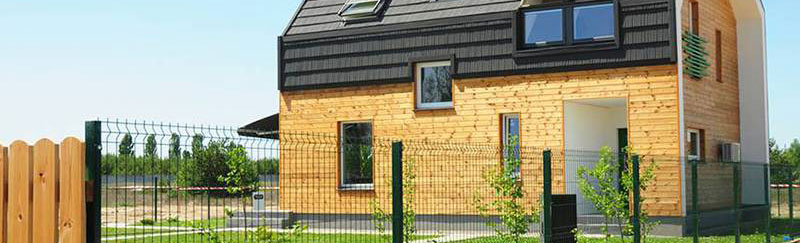
We call passive houses those dwellings that use constructive and architectural elements in an optimal way and that have the objective of obtaining energy savings of between 70% and 90% compared to a conventional house.
This type of construction takes advantage of natural resources such as light to, with basic architectural elements, be able to considerably improve the energy efficiency of the home through temperature control. The use of natural materials, in turn, helps passive houses be beneficial for the health of their occupants.
Characteristics of passive houses or passivhaus
Although this type of construction began to be developed at the end of the 80s, it is in recent years when they are being taken more into consideration when developing projects and property constructions. So much so that with the passage of time, what is known as the Passivhaus standard has been reinforced, a certification that this type of construction can obtain if they meet certain requirements.
Among the main characteristics and determining factors that a dwelling must have to be considered a passive house and be able to obtain the Passivhaus standard are:
- Thermal insulation in walls, floor, and ceiling with the aim of minimizing energy losses and saving the maximum amount of energy. This can be achieved through the use of the most suitable materials in construction.
- Doors and windows capable of retaining as much cold as possible in summer and heat in winter, thus reducing the use of air conditioning to allow for effective energy savings.
- Planning and design in order to ensure that the site, location, and distribution of the different rooms of the dwelling are the most appropriate.
- Elimination of thermal bridges to decrease heat losses.
Airtightness through the control of air currents to improve the thermal comfort of each room of the dwelling.